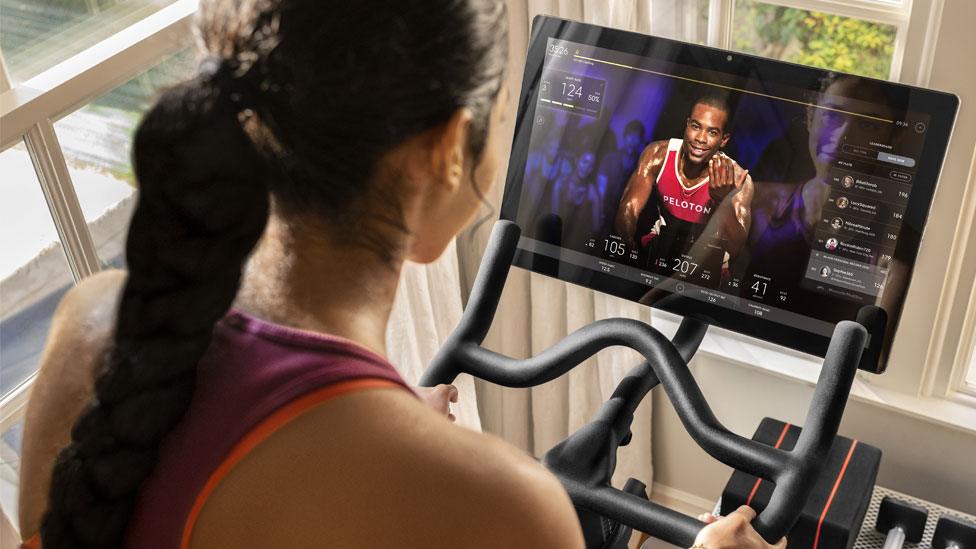
It’s been nearly 12 months since my wife and I bought a Peloton bike. For those of you who have spoken to me during this time this will not be new information! I often compare being an owner of a Peloton to being a vegan, you feel an urge to tell everyone and will preach the benefits of it to anyone willing to listen (including those who are polite enough to at least show the signs they are interested).
For those who don’t know, a Peloton is an exercise bike with a screen, which when attached to your wifi opens you up to a world of motivating instructors, challenging programmes, and varied classes. I told you I would have to tell you!
Very quickly one of my favourite instructors became Christine D’Ercole, a former World Champion track cyclist. Unlike most of the other instructors she talks about her experiences of actual cycling, which I love. The other thing I love is her mantra: ‘I am, I can, I will, I do’. Christine says:
“What I’ve learned from racing is that if I think I can’t handle it and I’m telling myself I can’t handle it, then I’ve decided I can’t handle it. There were so many moments that I caught myself and said, ‘But what if you can? What if you simply dug a little deeper, believed a little bigger, pushed a little harder, pedalled a little faster?’ And this turned into, ‘I am, I can, I will, I do,’ this little secret mantra of my own that I would repeat over and over,”. https://www.businessinsider.com/luminaries-christine-dercole-cycling-champion-peloton-instructor-2020-10
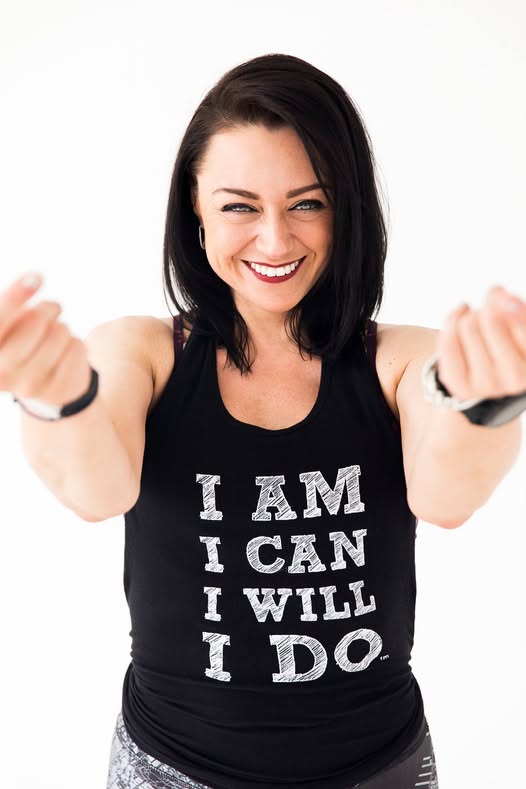
When taking her classes she repeats this mantra, and I find it works. I do dig a little deeper and pedal a bit quicker. As I thought a bit more about it, I thought this is relevant outside of Peloton world! This is relevant to the journey we have been on as a community, it’s what we encourage people to think about in our neighbourhood. This is kind of what we do!! These 4 steps could be a really useful reflection for those seeking to nurture community. Thanks Christine, I love you even more!
From ‘I’ to ‘We’
In Peloton world the ‘I’ language works. You are on your own, on a bike in your spare room, there is not really a ‘we’ in this scenario. Also, Christine’s mantra is designed to help you believe you can do it, rather than listening to your own inner self-doubt. I love this and it is so relevant in the real world. Having a strong sense of self is important, and I think reflecting individually on these 4 steps would help you better understanding your ‘why’ and what your unique contribution to the world could and should be. All really good and I encourage everyone to do it.
But to think about neighbourhood, community building, and a community life, it’s important to go beyond thinking individualistically. Nobody builds community alone, by its very nature it needs to be communal, shared, collective, mutual, a joint effort. One of my favourite quotes is Dietrich Bonhoeffer in his book ‘Life Together: The Classic Exploration of Christian Community’ when he said: “The person who loves their dream of community will destroy community, but the person who loves those around them will create community”. Bonhoeffer believed that people should love those around them to form community. He also believed that people who love their dream of community more than the community itself can destroy it, even if their intentions are good.
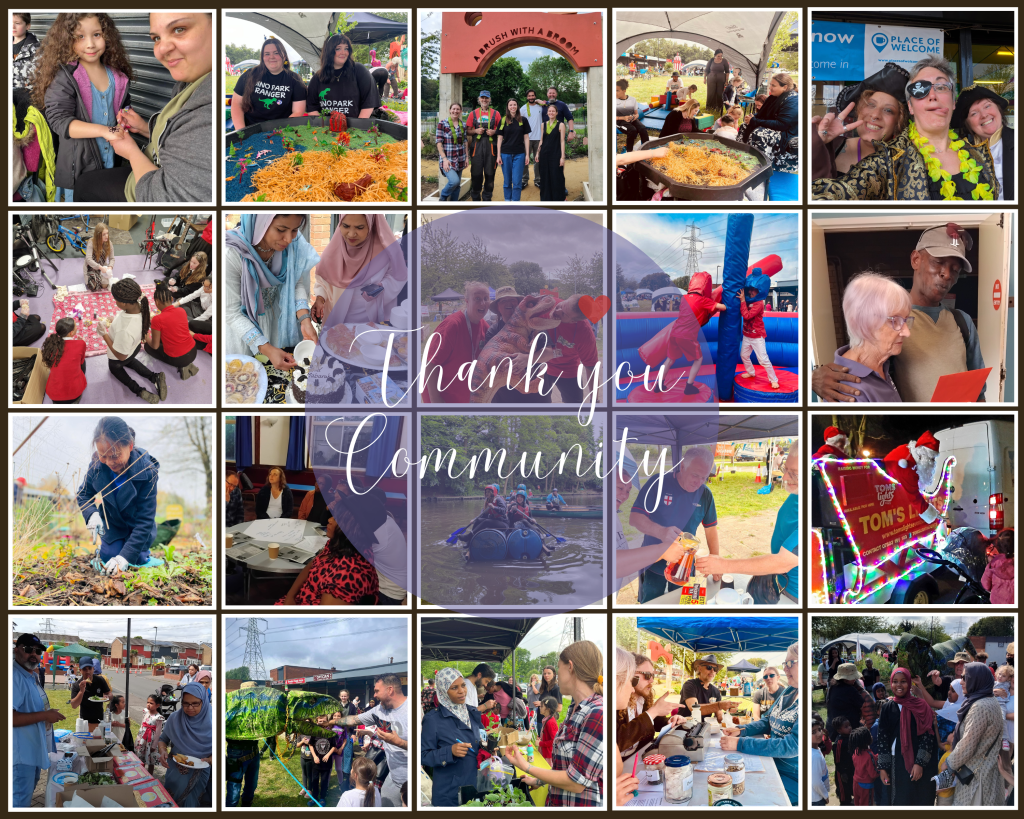
So when approaching community, I encourage us to think in terms of ‘we’. Even as I’m writing this I hear myself saying: Who is this we? Who gets to decide who the we is? Questions no doubt you are asking. I think it’s complicated (just like community itself!), and there isn’t going to be just one ‘we’. My experience of community life is a jumble of groups, places, people, connections, encounters and experiences. When I think about my ‘we’ I’d say I have included the connecting team, neighbourhood groups, church, those who organise community events, street gatherings & parties, those who bring the Hub to life, host the local pantry, local organisations, and my immediate neighbours. But I have also tried to think of the ‘we’ as our neighbourhood as a whole. What has become noticed, unearthed, become conscious, been celebrated and valued in the wider neighbourhood.
My challenge to you, and to myself, is to gather a group of people, ask these questions, and see what emerges. Here are some of my reflections.
Who we are?
In approaching this question I found myself asking: What do we understand about ourselves? What do we believe about ourselves? What do our experiences in community life tell us about who we are? What do we value and treasure?
We are people filled with gifts, skills, passions, experiences and stories. Even though I just said how important it is to go beyond the ‘I’, communities are made up of individuals who form the ‘we’. Every single person in our neighbourhood has something they could offer, something to share, a gift, a skill, something they are passionate about. These needs unearthing and sharing. We all need to be actors of the action, not a few who put on a show to an audience. Even during panto the audience has a key role to play (oh no they don’t, oh yes they do!).
We are people with wounds, hurts, and struggles, and may come from places of pain & brokenness. Some will come to community with happy hearts, some maybe more heavy laden, in reality for most people (if not actually all) these feelings co-exist. This will need careful support & care, and might require some more intentional space for healing and restoration. But these can be our gifts. Many professions now talk about services shaped (and delivered) by people with ‘lived experience’. Community should be like the Japanese practice of Kintsugi. This is the art of repairing broken pottery by mending the areas of breakage with lacquer dusted or mixed with powdered gold, silver, or platinum. It is a powerful metaphor for community life, because the brokenness can be the beauty.
We are citizens of a place, a neighbourhood. We dwell or inhabit in a place that is unique with it’s gifts, it’s assets, it’s challenges, and it’s stories. It’s also a place with an eco-system, that is both human and non-human. People, wildlife, trees, animals, flowers, a food supply, things we waste, all can be gifts, all need to be valued, and encouraged to flourish. Being a citizen includes the right to vote, hold public office, access social security, health services, and public education, and own land. In a world dominated by institutions, citizenship is increasingly limited to this. If only we had a better NHS, education, fairer welfare, the politicians we vote for doing what they promise, and better access to home ownership. Being a citizen includes this and I think we can all agree we want these things, but it is about way more. It is about identity and belonging, and social integration and relationships. Not just being a voting constituent of *insert name of constituency or being in a catchment area for a good school or doctor (or not), but also feeling connected in a self-defined place, neighbourhood, block and/or street. Being a citizen also should be about our responsibilities and accountability to each other, to follow the law, but more importantly to have the opportunity to contribute to the well-being of community.
Lastly, and more deeply, we are people capable of love. We are able to express this in so many ways, including generosity, kindness, compassion, caring, understanding, respect, trust, friendship and hopefulness. This becomes much more about ‘being’ than ‘doing’, but often it is the doing that takes our focus, energy and motivation. This reminds me of the quote: “At the end of the day people won’t remember what you said or did, they will remember how you made them feel”.
Taking careful time to reflect on who ‘we are’, and keep returning to this question is so important. As we reflect and learn through community it can (and should) change and evolve. The ‘we can, we will, we do’ flows out from who we are. As we journey through the questions the thinking and knowledge should deepen, and come full circle back to a deeper sense of who we are.
Below are some of my reflections on what I believe flows from who we are here in Firs and Bromford. I offer these gently because they come from my experience of our place. I think more important are the questions I asked myself (and will be asking others) to get us thinking.
We can
Questions: What do we believe we can do? What is in our hand or gift to do? What do we have power to do?
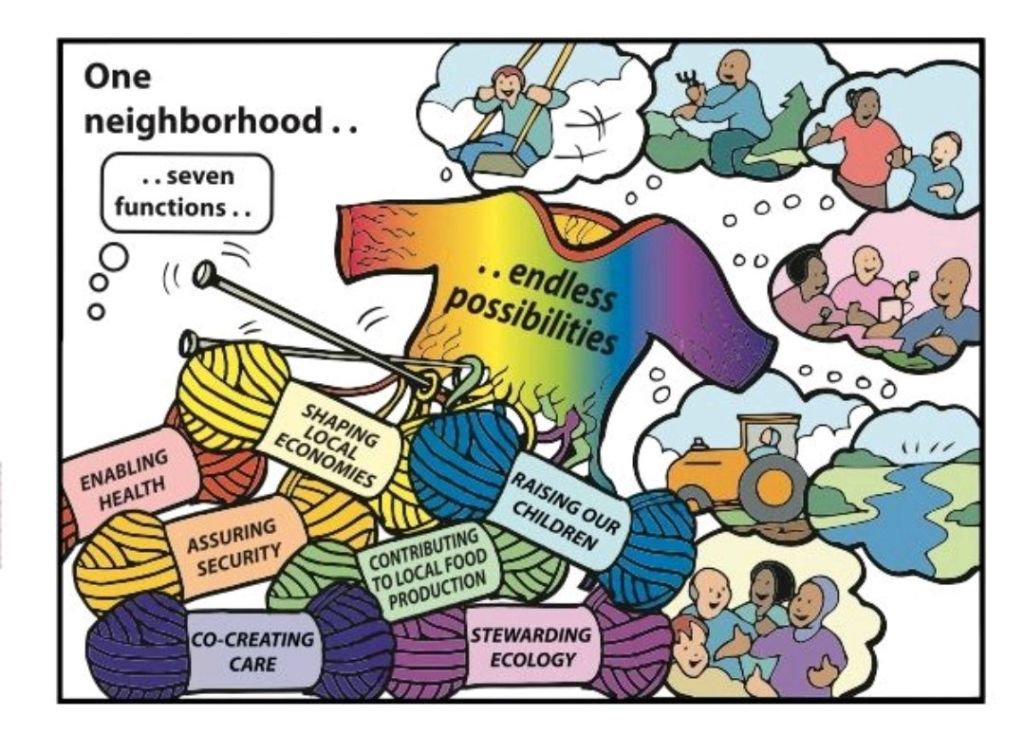
I thought We can make things, think things, create things, learn things, share things. We can be community together and be rooted in and to a place. We can experiment, try stuff, take risks, be the catalyst, make that step to connect, build bridges, have imagination and develop a vision.
We will
Questions: What are we willing to commit to? What is going to be important for us to focus on & value? What will be important to pay attention to?
We will go on a journey of discovery with others. We will try to do the things that can and will build community: being present, connecting with others, listening and paying attention, celebrating and valuing every act (big and small) of kindness, compassion, authenticity and love when we see it and experience it. Unearthing the passions, gifts, skills and possibilities. We will support and nurture people, relationships, ideas, creativity, purpose and community life. We will be reliable, committed to people, and safe. We will reflect and learn together, constantly be looking at ways to welcome the stranger, and ensuring there is space at the table for more people.
We do
Questions: What will be our first step? What do we do now that that lives this out, and need to do more of? What do we want to do and can do ourselves? What do we need a little help to do? What might be want to do, but need others to do it (with our consent)?
We do knock on doors to meet our neighbours, host street gatherings and parties to bring people together, host places of welcome to value hospitality and have welcoming people at the heart of everything. We nurture exchanges of gifts, skills, passions, and share our stories. We do open up space for imagination, creativity, learning, celebration, honesty, support, and care.
As I write this it’s the end of another calendar year. I always find December into January a good time for reflection and renewal, so I will be entering 2025 holding onto this mantra: ‘We are, We can, We will, We do’. I wish you all a happy and fruitful new year of more discovery & mischief making!!
Blog written by Paul